
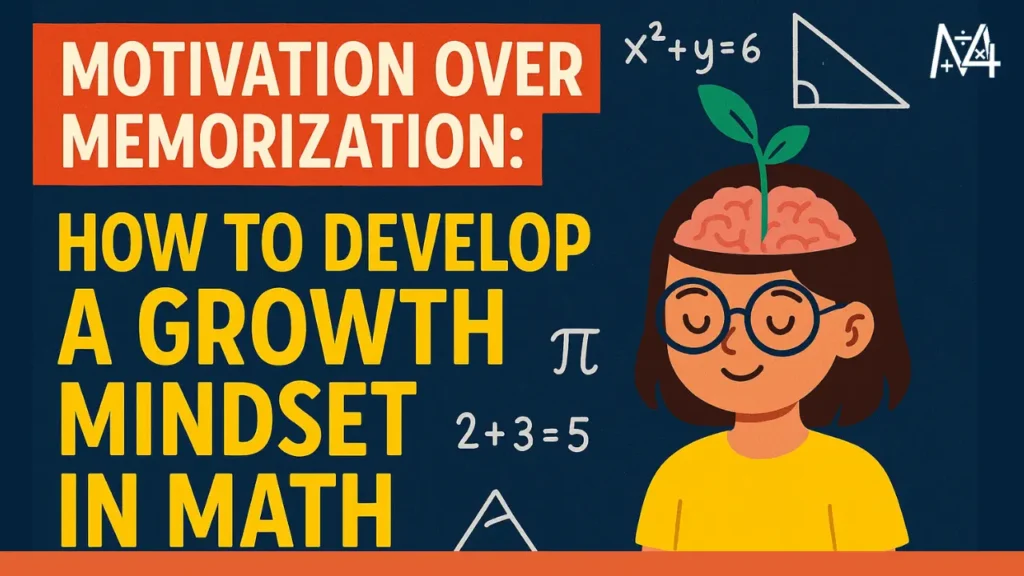
Developing a growth mindset in math can transform the way students approach learning. Instead of relying on rote memorization, focusing on motivation, problem-solving, and curiosity helps learners build confidence and long-term understanding. By adopting strategies that promote active engagement and resilience, students can turn challenges into opportunities for growth.
What is a Growth Mindset in Math?
A growth mindset is the belief that abilities and intelligence can be developed through effort, practice, and learning from mistakes. In math, this means seeing challenges as opportunities to improve rather than obstacles to avoid. Students with a growth mindset are more willing to take risks, explore new strategies, and persist even when concepts seem difficult.
Benefits of a Growth Mindset in Math
- Improved problem-solving: Students approach problems creatively rather than relying solely on memorized formulas.
- Increased confidence: Believing that skills can grow reduces math anxiety.
- Long-term retention: Understanding concepts deeply helps students remember and apply knowledge effectively.
Why Motivation Matters More Than Memorization
Memorization may help students recall formulas or procedures temporarily, but it doesn’t foster true understanding. Motivation drives engagement, encourages experimentation, and helps students connect math to real-world contexts. When students are motivated:
- They practice consistently and enjoy challenges.
- They are more likely to ask questions and seek help when needed.
- They develop perseverance, which is key to mastering complex topics.
Strategies to Build a Growth Mindset in Math
1. Encourage Mistakes as Learning Opportunities
Mistakes are valuable feedback, not failures. Discuss errors openly, analyze what went wrong, and use them as teaching moments. This approach reduces fear and fosters resilience.
2. Set Process-Oriented Goals
Instead of focusing solely on correct answers, set goals related to effort, strategy, and understanding. For example, aim to “try three different approaches to solve a problem” rather than just “get the right answer.”
3. Use Real-World Math Applications
Relating math to everyday situations makes learning meaningful. Activities like budgeting, building projects, or analyzing data help students see the purpose of what they are learning.
4. Provide Positive Feedback
Praise effort, strategy, and persistence instead of intelligence. Statements like “You worked hard and found a smart solution” reinforce the value of dedication and learning from challenges.
5. Teach Reflection and Self-Assessment
Encourage students to review their work, reflect on their strategies, and identify areas for improvement. Reflection helps students internalize lessons and understand their own learning process.
Tools and Resources to Support a Growth Mindset in Math
- Interactive math platforms: Software like Math 4U or Sowiso helps students explore concepts dynamically rather than relying on memorization.
- Collaborative learning: Group activities and peer discussions provide multiple perspectives and reinforce learning.
- Gamified challenges: Math games and challenges keep motivation high while promoting problem-solving skills.
How Parents and Teachers Can Foster Motivation
Parents and teachers play a key role in shaping a student’s mindset. Strategies include:
- Encouraging curiosity and exploration.
- Modeling perseverance and problem-solving.
- Celebrating progress and effort rather than just correct answers.
By creating a supportive environment, adults can help students feel confident in their ability to grow and succeed in math.
Final Thoughts
Shifting the focus from memorization to motivation transforms the math learning experience. A growth mindset equips students with skills to tackle challenges, think critically, and enjoy the learning process. By emphasizing effort, curiosity, and persistence, learners can achieve meaningful progress in math and develop confidence that lasts beyond the classroom.